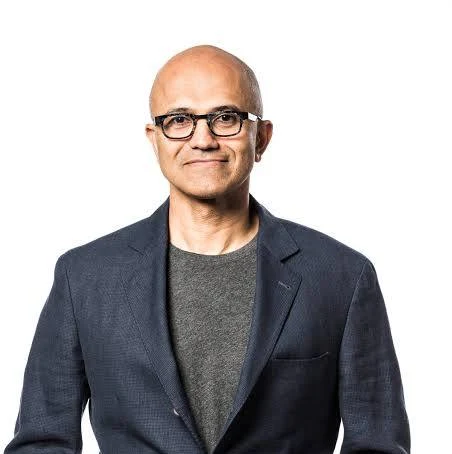
Biography
Satya Narayana Nadella is an Indian-American technology executive who became Microsoft's chief executive officer in February 2014 and later became chairman of the company's board. His career at Microsoft spans engineering, enterprise software, cloud infrastructure, and corporate leadership.
Nadella is associated with Microsoft's shift toward cloud computing and subscription-based services. During his tenure, products and businesses including Azure, Microsoft 365, GitHub, and the company's AI offerings became important parts of its strategy.
His leadership has emphasized cloud infrastructure, developer tools, enterprise customers, partnerships, and the integration of AI into Microsoft's products.
Early Life and Education
Nadella was born on August 19, 1967, in Hyderabad, India. He grew up in a family that valued education. As a young person, he developed an interest in technology and cricket.
He studied electrical engineering at the Manipal Institute of Technology, graduating in 1988. He then moved to the United States for further studies.
Nadella earned a master's degree in computer science from the University of Wisconsin–Milwaukee in 1990. He later completed a Master of Business Administration at the University of Chicago Booth School of Business while building his technology career.
Early Career
Before joining Microsoft, Nadella worked at Sun Microsystems. He joined Microsoft in 1992 and took on engineering and management responsibilities across different product and business groups.
His early Microsoft work included enterprise software and online services. Over time, he moved into senior leadership roles involving business applications, server products, and cloud infrastructure.
Building Microsoft's Cloud Business
Before becoming CEO, Nadella led Microsoft's Server and Tools business and later its Cloud and Enterprise group. These roles placed him at the center of the company's expansion into cloud computing.
Microsoft Azure became a major part of Microsoft's enterprise strategy, providing computing, storage, databases, networking, analytics, and other cloud services to organizations around the world.
The expansion of cloud infrastructure also supported Microsoft's software subscriptions and developer ecosystem, helping the company serve businesses across a wide range of industries.
Becoming Microsoft's CEO
Microsoft appointed Nadella chief executive officer in February 2014, succeeding Steve Ballmer. He became the company's third CEO, following co-founder Bill Gates and Ballmer.
Nadella promoted a greater emphasis on cloud services, cross-platform products, developer communities, and collaboration. Microsoft expanded its availability across operating systems and strengthened its cloud and subscription businesses.
During his leadership, Microsoft completed significant acquisitions, including LinkedIn in 2016 and GitHub in 2018. The company also continued developing its gaming business, enterprise products, and cloud platform.
Artificial Intelligence and Microsoft
Artificial intelligence became a major part of Microsoft's technology strategy under Nadella. The company invested in AI infrastructure and expanded AI capabilities across its cloud services and software.
Microsoft developed and deployed AI tools through Azure and products such as Microsoft Copilot. Its partnership with OpenAI helped bring advanced generative AI systems into Microsoft's products and services.
The expansion of AI has also raised questions about infrastructure costs, energy use, data privacy, copyright, safety, and the effects of automation on work.
Leadership Philosophy
Nadella has spoken about the importance of a growth mindset, continuous learning, empathy, and collaboration. These themes have featured in Microsoft's internal culture and public leadership discussions.
His approach has included investing in cloud infrastructure, supporting developer platforms, building partnerships, and expanding the use of Microsoft's products across different operating systems.
Microsoft's size and influence mean that its business decisions also attract scrutiny concerning competition, cybersecurity, privacy, and the governance of AI systems.
Career Timeline
Graduates from Manipal
Completes an electrical engineering degree.
Completes computer science studies
Earns a master's degree at the University of Wisconsin–Milwaukee.
Joins Microsoft
Begins a career spanning engineering and business leadership.
Becomes Microsoft CEO
Succeeds Steve Ballmer as chief executive officer.
Major acquisitions
Microsoft acquires LinkedIn and GitHub during his tenure.
Becomes Microsoft chairman
Assumes the role of chairman of Microsoft's board.
Expands Microsoft's AI strategy
AI capabilities become increasingly integrated across Microsoft's products and cloud services.
Influence on the Technology Industry
Nadella's leadership has coincided with Microsoft's evolution from a company primarily associated with personal-computer software into a major provider of cloud infrastructure, enterprise services, development tools, and AI products.
His career illustrates the importance of adapting established technology businesses to changes in computing platforms, software distribution, and customer needs.
Sources and Further Reading
These sources provide additional information about Nadella's background and Microsoft's leadership.