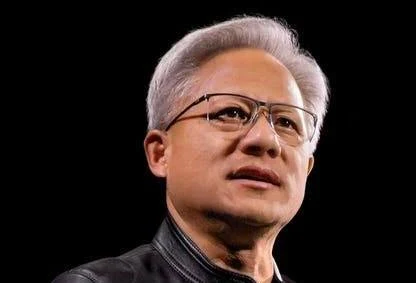
Biography
Jensen Huang, born Jen-Hsun Huang, is a Taiwanese-American business executive and electrical engineer. He co-founded NVIDIA in 1993 and has served as its president and chief executive officer since the company's founding.
NVIDIA initially became known for graphics processing technology used in personal computers and video games. Its GPUs later became important tools for scientific computing, deep learning, and modern artificial intelligence.
Under Huang's leadership, NVIDIA expanded from graphics chips into a broader computing platform encompassing processors, networking, software, AI development tools, and data-center systems.
Early Life and Education
Huang was born in Taipei, Taiwan, on February 17, 1963. During his childhood, he spent time in Taiwan and Thailand before moving to the United States.
He attended Oregon State University, where he earned a bachelor's degree in electrical engineering in 1984. He later completed a master's degree in electrical engineering at Stanford University in 1992.
His engineering education and experience in semiconductor design helped prepare him for a career in computer hardware and technology entrepreneurship.
Early Career
Before founding NVIDIA, Huang worked at semiconductor companies including Advanced Micro Devices (AMD) and LSI Logic. His work involved engineering and chip design.
These experiences gave him exposure to the semiconductor industry and the technical challenges involved in designing high-performance computing hardware.
Founding NVIDIA
Huang co-founded NVIDIA in 1993 with Chris Malachowsky and Curtis Priem. The company focused on graphics processing and the development of chips capable of handling increasingly complex visual workloads.
NVIDIA introduced products that helped establish GPUs as a major component of computer graphics. Over time, its technology expanded into professional visualization, scientific research, autonomous systems, and data centers.
Huang's role has included guiding the company's product strategy, engineering priorities, business development, and expansion into new computing markets.
NVIDIA and Artificial Intelligence
NVIDIA GPUs became widely used for training and running machine-learning systems because they can perform many mathematical operations in parallel. The company's CUDA software platform also allows developers to build applications that use GPU acceleration.
As deep learning and generative AI grew in importance, NVIDIA expanded its products for AI development and deployment. These offerings include GPUs, networking equipment, software libraries, and integrated data-center computing systems.
The company has become a central supplier in the AI computing ecosystem. Its market position has also attracted scrutiny concerning competition, supply constraints, export controls, and the energy demands of large computing systems.
Leadership and Business Strategy
Huang's leadership has emphasized long-term engineering investment, accelerated computing, software ecosystems, and the close integration of hardware and software.
NVIDIA's strategy extends beyond selling individual chips. The company develops computing platforms that combine processors, interconnects, systems, and software for customers building AI and high-performance computing infrastructure.
Huang is also known publicly for presenting NVIDIA's technology road maps and new products at major industry events.
Career Timeline
Graduates from Oregon State University
Earns a degree in electrical engineering.
Completes Stanford graduate studies
Earns a master's degree in electrical engineering.
Co-founds NVIDIA
Launches the company with Chris Malachowsky and Curtis Priem.
Expands GPU computing
NVIDIA develops GPU technologies and software for broader computing workloads.
Accelerated computing grows
GPUs become increasingly important for AI and scientific computing.
AI infrastructure expands
NVIDIA grows its portfolio of AI chips, networking, systems, and software.
Influence on the Technology Industry
Huang's work has helped shape the development of GPU computing and its use beyond traditional graphics. NVIDIA's products are used in gaming, research, engineering, cloud computing, and AI applications.
His career illustrates how semiconductor design, software platforms, and long-term investment in computing infrastructure can influence the direction of the technology industry.
Sources and Further Reading
Consult these sources for further information about Huang's career and NVIDIA's history.